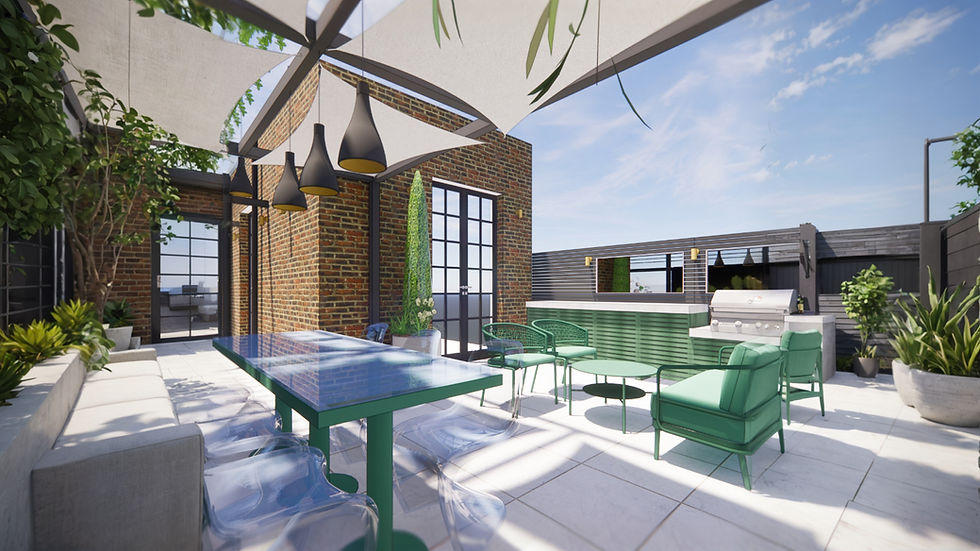
How to Create Privacy in a London Garden Without Closing It In

Privacy is one of the most common considerations when designing a London garden. With neighbouring properties often overlooking outdoor spaces, creating somewhere that feels calm and secluded can be challenging.
Yet privacy doesn't have to mean high fences, dense hedging or enclosing every boundary. The most successful gardens achieve a balance between screening and openness, creating a sense of retreat while allowing light, movement and natural beauty to remain.
At MRLandscapes, we approach privacy as an integral part of garden design, rather than something to address once the layout is complete.
Start with the way the garden is used
Before considering screening, it's important to understand where privacy is actually needed.
An outdoor dining area may require protection from neighbouring windows, while a seating area at the end of the garden might benefit from a more enclosed, intimate atmosphere. Other areas may need little screening at all.
By identifying key sightlines early in the design process, privacy can be introduced selectively, avoiding the need to surround the entire garden with tall structures.

Use planting to create natural screening
Planting is one of the most effective ways to introduce privacy without making a garden feel enclosed.
Multi-stem trees can provide screening at eye level and above, while allowing light to filter through their canopies. Evergreen shrubs offer year-round structure, and layered planting creates depth and softness around boundaries.
Species selection should always respond to the garden's conditions, available space and long-term maintenance requirements.
The aim is to create screening that feels like part of the landscape, rather than a barrier imposed upon it.
Introduce architectural screening
Where more immediate privacy is required, architectural elements can provide a beautifully considered solution.
Slatted timber screens, contemporary fencing and bespoke pergolas can define areas of the garden while maintaining a sense of openness.
The choice of materials is particularly important. Natural timber, refined metalwork and carefully proportioned structures can complement the architecture of the home and establish a cohesive design language throughout the space.
Combining these elements with planting helps soften their appearance and creates a more inviting environment.

Think vertically
In compact London gardens, privacy often needs to be addressed above boundary level.
Pleached trees, strategically positioned canopies and pergolas can help interrupt overlooking sightlines without sacrificing valuable ground space.
Vertical planting also draws the eye upwards, adding another dimension to the garden and creating a greater sense of depth.
Create privacy through layout
Sometimes the most effective solution is not additional screening, but a more intelligent arrangement of the space itself.
Changing the position of a seating area, introducing a raised planter or adjusting the orientation of an outdoor kitchen can significantly improve privacy.
A thoughtfully designed garden uses layout, levels, materials and planting together to establish a natural sense of separation.

A garden that feels like your own
Privacy should enhance the experience of being outdoors, not restrict it.
The best London gardens feel sheltered without being enclosed, connected to their surroundings without feeling exposed, and carefully structured without losing their natural character.
At MRLandscapes, we design and build bespoke gardens across London, combining architectural landscaping with considered planting to create outdoor spaces that feel private, beautiful and effortlessly connected to the home.
Considering a garden redesign? Contact MRLandscapes to discuss how thoughtful garden design can transform your outdoor space.
t